本文属于机器翻译版本。若本译文内容与英语原文存在差异,则一律以英文原文为准。
多云环境的连接模式
在复杂的多云场景中,你的 Amazon RISE with SAP 环境可能需要连接本地系统、托管工作负载、SaaS 解决方案和其他云服务提供商。
直接从中管理连接 Amazon 可消除对本地网络基础设施的依赖,从而提高整体环境的可用性和弹性。
您可以使用公共或私有连接将多云环境连接到 RISE。
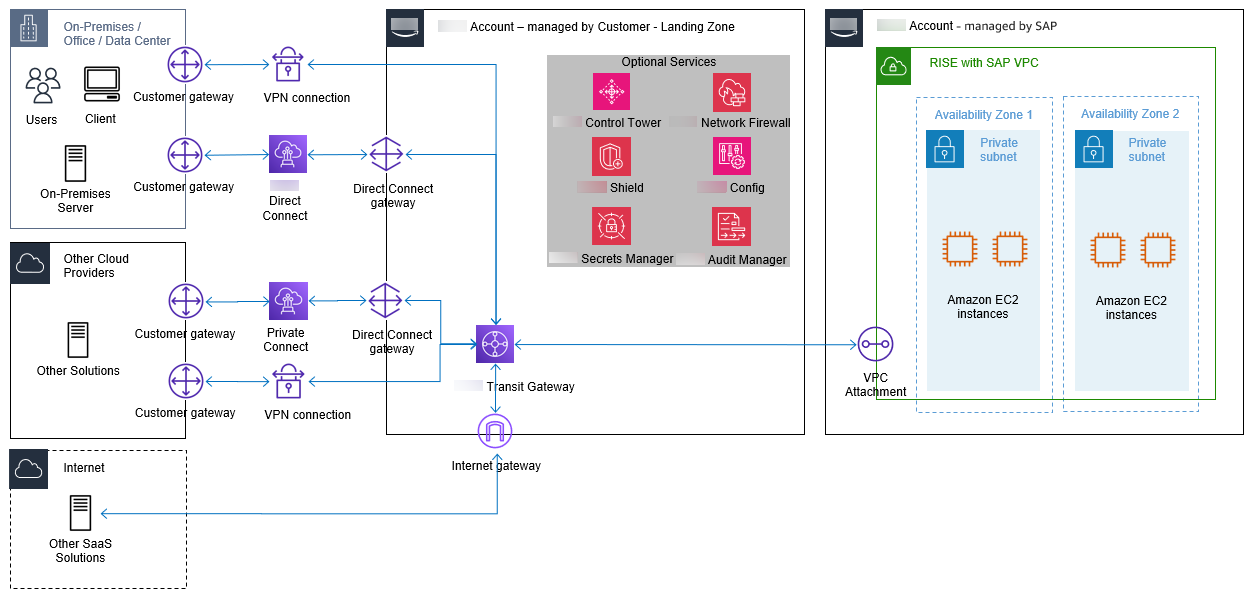
公有连接
连接通过互联网路由。此模式通常用于 RISE with SAP 与跨多个云运行的 SaaS 解决方案之间的连接。建立通过互联网路由的连接时,请考虑以下几点:
-
确保所有通信均已加密
-
使用弹性负载均衡器和 Shield 等 Amazon 服务保护端点 Amazon
-
使用 Amazon 监控终端节点 CloudWatch
-
确保托管的两个公有 IP 地址之间的流量通过网络路由 Amazon Amazon
私有连接
以下选项可用于在云服务提供商之间建立私有连接:
-
Site-to-site 通过公共互联网路由的 VPN 加密隧道
-
在托管基础架构中使用 Amazon Direct Connect 进行私有互连(使用 ExpressRoute 适用于 Azure 的 Azure 和谷歌云平台的谷歌专用互连)
-
在与多云连接提供商的设施中使用 Amazon Direct Connect 进行私有互连
-
使用 Amazon 互连服务私密连接其他云提供商(目前仅限 Google Cloud)
借助 Amazon Interconnect,您可以在与其他云端(当前为 Google Cloud)之间 Amazon 建立直接的私有连接。您不需要物理路由器或本地路由, Amazon Interconnect 包括内置的媒体访问控制安全 (MacSec) 加密。
有关支持区域的更多信息,请参阅区域可用性。
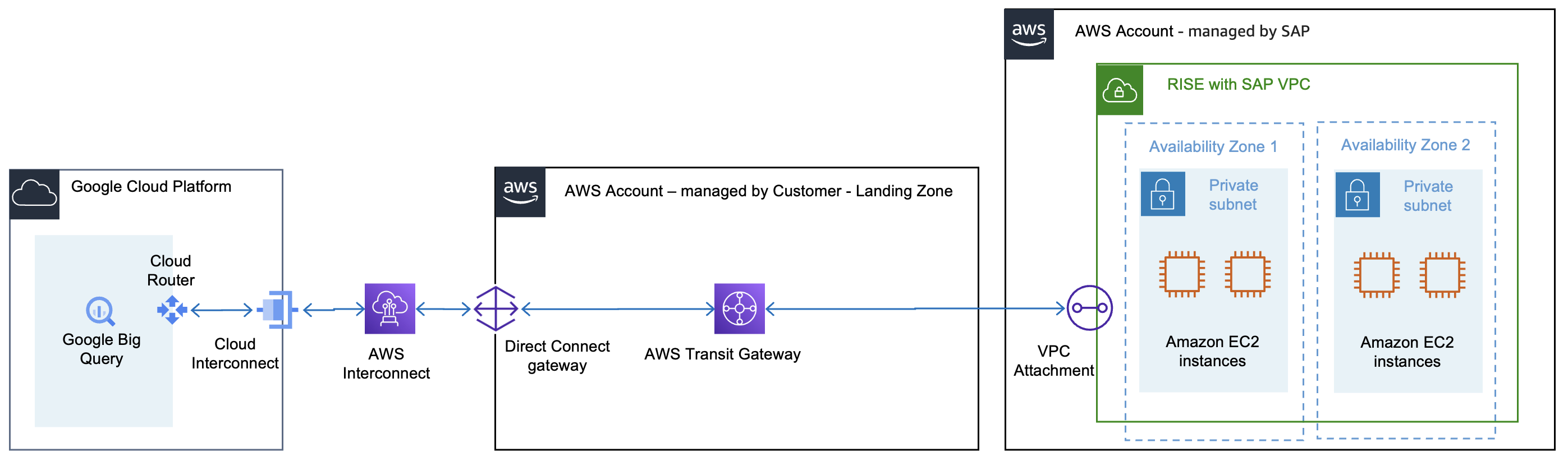
示例用例 1:RISE on Amazon 到 GCP BigQuery
如果您在 RISE S/4HANA 上运行 SAP, Amazon 并使用 Google Cloud BigQuery 进行分析和机器学习,则可以通过私有高速连接进行实时数据复制,从而从中受益。这种连接会持续将数据从 SAP 应用层传输到 Google Cloud 数据仓库,而不会将其暴露给公共互联网。
建立 Amazon 互连并将流量从 R Amazon ISE 传输到 GCP 后,请在 Google Cloud 端完成剩余的连接配置。这样可以确保数据保留在 Google Cloud 网络中。
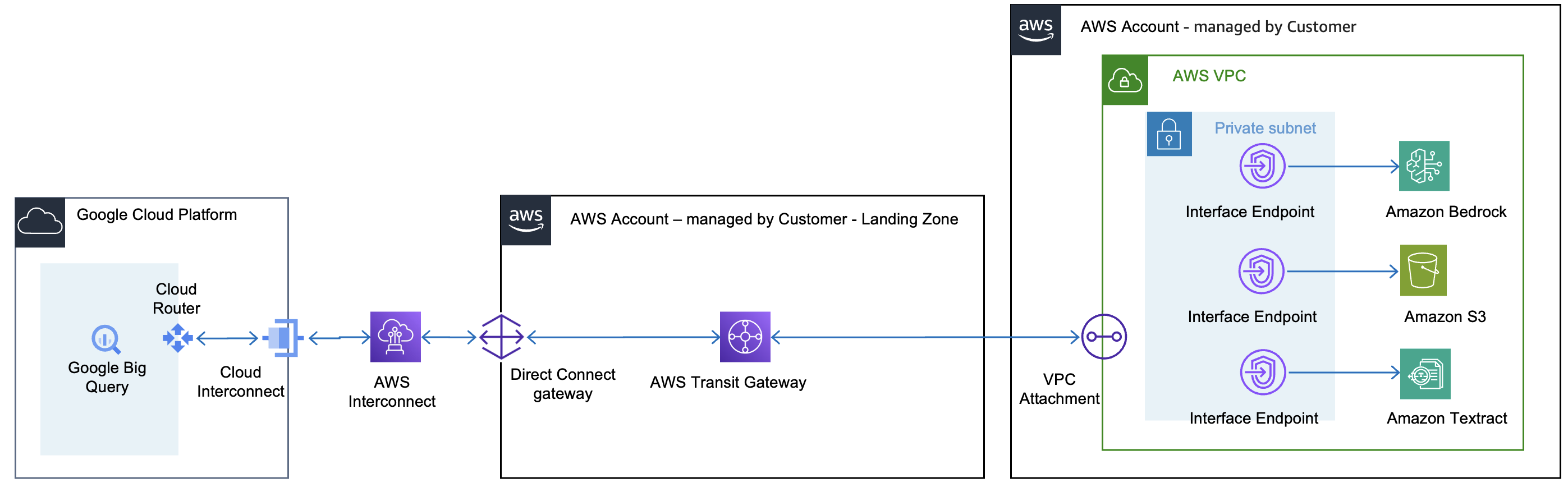
示例用例 2:在 GCP 上升至 Amazon 务
如果你 S/4HANA 在谷歌云上的 RISE 上运行 SAP,你可以使用适用于 SAP ABAP 的 Amazon 软件开发工具包直接从 ABAP 应用程序层本地使用 Amazon 服务,例如亚马逊 Bedrock、Amazon Textract 和 Amazon S3。通过这种集成,您可以使用智能云服务扩展核心业务流程,从而推动自动化、文档处理和可扩展的数据管理。
Amazon Interconnect 将谷歌云 RISE 环境连接到 Amazon VPC。VPC 终端节点 (Amazon PrivateLink) 公开所需的 Amazon 服务。Google Cloud 上的 SAP 系统与 SAP 系统之间的所有流量都 Amazon 保留在私有网络基础架构上,不会通过公共互联网。这样可以实现低延迟、安全的跨云服务使用。
在 Google Cloud 端完成必要的路由配置,将流量从 RISE 环境引导到 Amazon 互连。
有关更多信息,请参阅适用于 S AP ABAP 的 Amazon 软件开发工具包中的自定义 VPC 终端节点。
Amazon Interconnect 是一项完全托管的服务,可在与其他云提供商 Amazon 之间提供私有的高速连接。与 Site-to-Site VPN 或自行管理的 Di Amazon rect Connect 不同,它不需要托管设施、物理路由器、交叉连接或 BGP 对等互连配置。
Amazon 互连具有以下优点:
-
默认情况下,媒体访问控制安全 (MacSec) 第 2 层加密。
-
低延迟和专用带宽。
-
Built-in 通过云提供商接入点之间的预配置容量池实现冗余(PoPs)。
-
降低了操作复杂性。
-
性能和可靠性超过基于互联网的 VPN 连接或自我管理的 Direct Amazon Connect 实现。
下表将 Amazon 互连与传统连接方法进行了比较。
| 标准 | Amazon 互连 | 传统(VPN/ Self-managed 直接连接) |
|---|---|---|
|
设置 |
完全托管,一站式。无需配置物理路由器、交叉连接或 BGP 对等连接。 |
需要订购交叉连接、配置路由器、管理 BGP 会话以及经常与托管设施签订合同。 |
|
加密 |
默认情况下启用 MacSec(第 2 层),无需手动设置隧道或加密。 |
VPN 需要 IPsec 隧道配置;Direct Connect 需要客户进行可选的 MacSec 设置。 |
|
Infrastructure |
Amazon 合作伙伴云在两者之间预先构建了大量容量池 PoPs,无需维护物理连接。 |
客户必须配置和维护专用的物理链路或依赖托管提供商。 |
|
性能 |
私有专用带宽,具有稳定的低延迟(互联网路由没有可变性)。 |
VPN 穿越公共互联网(延迟可变)。 Self-managed Direct Connect 提供了类似的性能,但存在运营开销。 |
|
主机托管要求 |
无需填写。直接在云提供商之间建立连接。 |
通常需要在两家提供商都有 PoP 的主机托管设施中工作。 |
|
复杂度 |
最小。简化的配置过程可以处理路由和物理连接。 |
意义重大。团队必须跨提供商管理设备、合同和网络配置。 |
|
恢复能力 |
Built-in 预置容量池间的冗余。 |
客户负责设计冗余(多个连接、故障转移)。 |
有关更多信息,请参阅什么是 Amazon 互连。
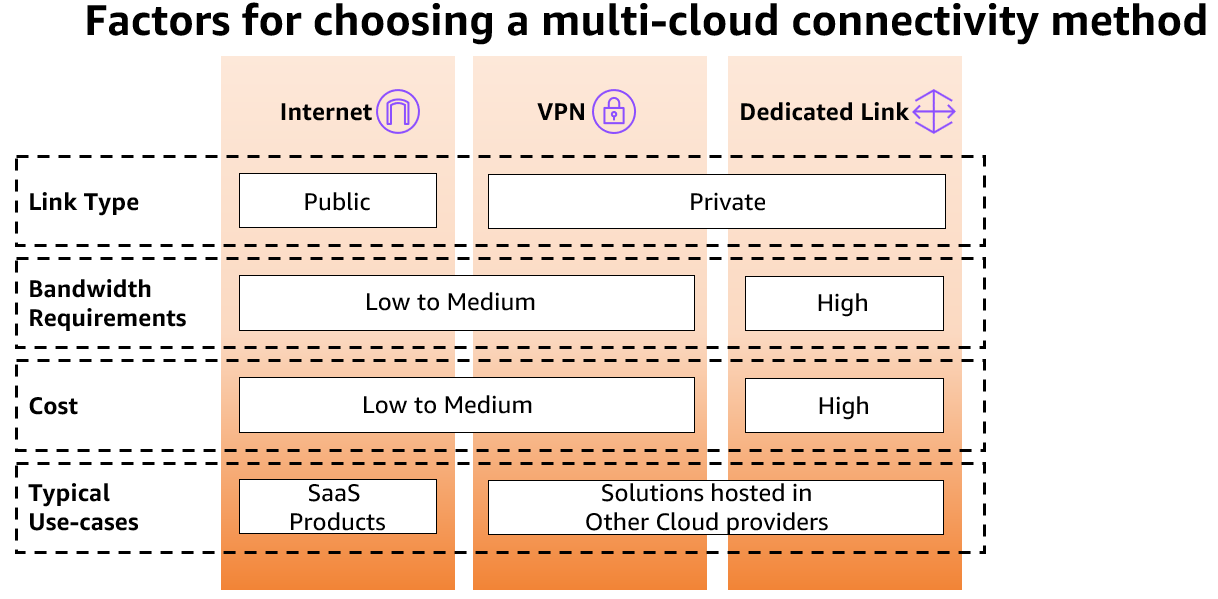
下图描述了选择多云连接方式时需考虑的因素。
有关更多信息,请参阅设计与 Microsoft Azure Amazon 之间的私有网络连接